OpenArt AI Clothes Changer
Most complete legal outfit editor — precise masking, prompt control, clear terms.
Visit official siteType the phrase "ai cloth off" into a search engine and you will be served two completely different kinds of results. The first is a fast-growing family of legitimate AI photo editors — tools like OpenArt's AI Clothes Changer, Kling AI's outfit swap feature, Imagine.art, Krea, PhotoRoom and Aragon — that restyle, replace or retouch clothing in a photo you own or have permission to edit. The second is a shadow industry of so-called nudify or undress apps that promise to fabricate nude imagery of real people from an ordinary uploaded photo.
This page exists because the second category is where the money traps, the legal exposure and the real-world harm live. ClothOff Watch is an independent consumer-protection desk: we document how viral clothing-removal apps actually behave once you upload and pay, which laws they now break, what to do if one has been used on you or someone you care about, and which tools will do the legal version of the job — a clean outfit change on your own pictures — without the risk.
You will not find instructions here for producing fake intimate imagery. That omission is deliberate: in most of the English-speaking world, generating or sharing a fake nude of a real person without consent is now a crime, a fast route to a civil lawsuit, or both. What we can do is save you money, keep your photos out of a stranger's training set, and point victims at the removal services that genuinely work.
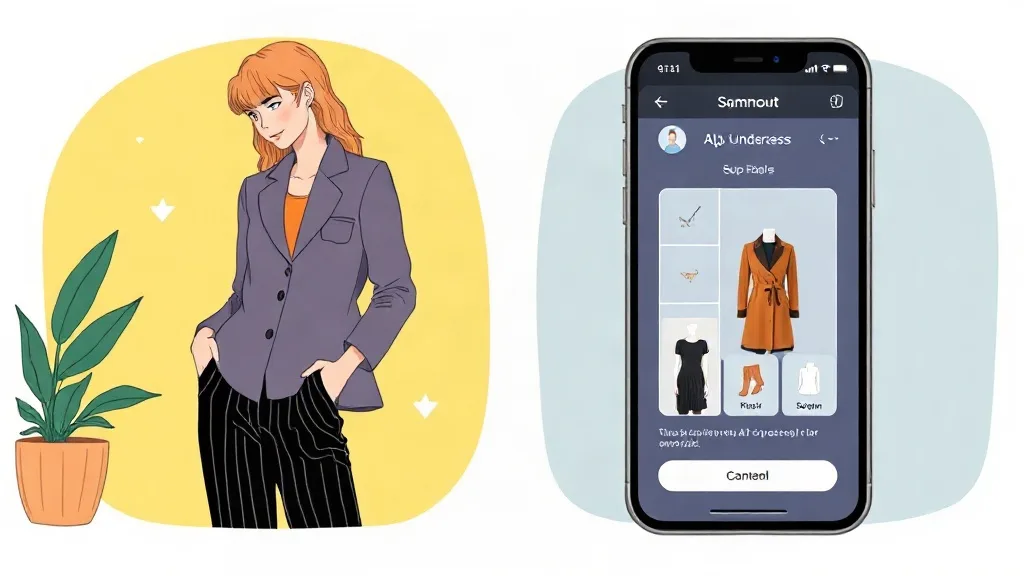
AI cloth off tools at a glance
Our current picks for the legal side of this keyword — outfit editing, virtual try-on and clothing retouch — plus the two services every victim should bookmark. Detailed notes on each follow below.
| Tool | What it does | Free tier | Verdict |
|---|---|---|---|
| OpenArt AI Clothes Changer | Mask + prompt outfit replacement | Yes, credit-based | Best all-round legal editor |
| Kling AI Clothes Changer | Reference-driven outfit swaps | Limited daily credits | Most realistic swaps |
| Imagine.art Clothes Changer | One-click try-on and restyle | Yes | Easiest for beginners |
| Krea Change Clothes | Virtual try-on editor | Limited free | Fastest try-on workflow |
| PhotoRoom / Evoto | Wrinkle and garment retouch | Yes | Best for product photos |
| StopNCII / Take It Down | Victim image-blocking services | Free | The ones that actually help |
Two very different products share one search term
The confusion starts with branding. Legal AI clothing editors sell you credits or a subscription for inpainting: you mask a jacket or a dress in your own photo, describe a replacement, and a diffusion model redraws that region. Their business is software. Nudify apps, by contrast, sell a claim — that a model can reconstruct a stranger's body under their clothes. It cannot do so truthfully; it fabricates. And because the output is non-consensual intimate imagery of a real person, the entire revenue model ends up depending on payment channels and hosting that tolerate abuse: anonymous crypto checkout, disposable domains, Telegram bot front-ends, and terms of service written to launder responsibility onto the uploader.
Security researchers and mainstream outlets have been documenting this market since late 2023, when investigations found dozens of undress sites pulling in millions of visits a month. Since then the pattern has only industrialised: the same operators relaunch under new names after chargebacks or takedowns, and "free" clones increasingly bundle credential-stealing malware. Knowing which column a result falls into is now a basic consumer skill.
OpenArt AI Clothes Remover & Clothes Changer
OpenArt is the most complete answer to the legal version of this query. You upload a photo, brush over the garment you want to change, type a description — "black leather jacket", "summer floral dress" — and the model regenerates just the masked region while leaving face, pose and background untouched. Non-destructive editing means you can iterate on the same upload rather than starting over, and style presets keep lighting and texture coherent with the rest of the frame. OpenArt's clothes changer publishes clear terms and a real privacy policy, which is exactly what the scam end of this niche never has.
- Precise brush-mask region selection instead of blunt auto-detect
- Prompt-driven results, so output style is steerable
- Transparent company, billing and data terms
- Complex edits may need several generations to look right
- Highest-res exports sit behind paid credit plans
- A general editor — not a dedicated garment-fitting engine
Kling AI Clothes Changer
Kling AI's clothes changer takes a reference-driven approach: you supply a photo of the person and, optionally, a reference image of the target outfit. The model transfers the garment while preserving identity, pose and proportions — the same consistency tech behind Kling's video generation. In our checks it produced the most believable fabric behaviour of the tools tested, especially on plain backgrounds.
- Reference-image workflow gives strong control over the target garment
- Best-in-class realism for folds, fit and lighting
- Daily free credits are enough to evaluate properly
- Generation queues at peak hours
- Busy patterns can drift between generations
- Account required before any upload
Imagine.art AI Clothes Changer
Imagine.art is the lowest-friction option we tried: upload, pick a style direction, generate. There is no masking step, which makes it ideal for quick restyle experiments — seeing yourself in a suit, a different colour palette or a costume concept — though it also means less surgical control than OpenArt's approach.
- Fast, genuinely usable free tier
- Clean mobile experience
- No editing skills needed at all
- Less precise than mask-based tools
- Free outputs carry a watermark
- Aggressive upsell prompts after a few generations
Krea Change Clothes — virtual try-on
Krea's change-clothes app is pitched squarely at virtual try-on: swap the garment in a portrait or full-body shot and evaluate the result in near real time. It handled upper-body swaps on clear photos well in our tests, and the editing canvas makes regenerations cheap to iterate.
- Responsive editor with quick iteration
- Good garment transfer on well-lit source photos
- Daily free allowance for casual use
- Struggles with occlusions — crossed arms, hair over fabric
- Edge artefacts on hands and jewellery
PhotoRoom, Evoto, Aragon — the retouching end
Several of the top results for this query sit at the safest end of the spectrum: retouching rather than swapping. PhotoRoom's wrinkle remover and Evoto's clothing cleanup flatten creases and tidy garments on product and portrait shots — built for e-commerce sellers. Aragon's clothing changer targets professional headshots, re-dressing a casual photo in business attire. BeautyPlus and ElevenLabs also ship lightweight changers worth a look for casual use.
- Unambiguous legal footing — commercial retouching use cases
- Purpose-built for product photography and headshots
- Fast, polished mobile and web apps
- Narrow scope — retouching, not full outfit redesign
- Best features concentrated in paid tiers
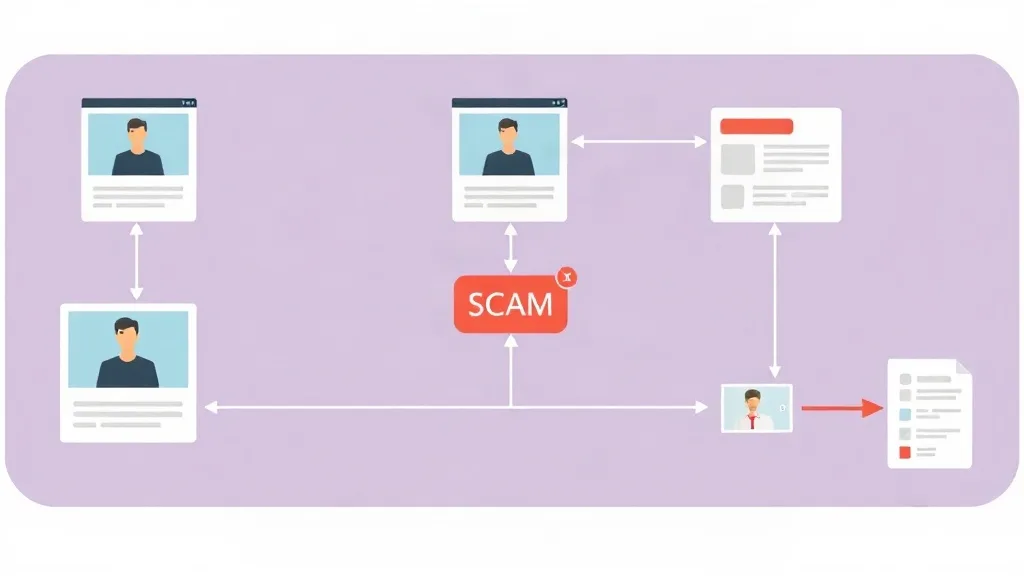
The scam playbook behind undress and nudify apps
Across the dozens of clothing-removal services we have tracked, the monetisation patterns repeat with very little variation. Recognising three or four of these in one place is a reliable signal to close the tab.
- Crypto-only or gift-card checkout. Legitimate SaaS takes cards through a named merchant. A site that only accepts Bitcoin, USDT or vouchers is engineered to make refunds and chargebacks impossible — the single strongest tell in this niche.
- The free-credit funnel. One free "generation" produces a blurred or watermarked image; the paywall appears at the exact moment of maximum curiosity. Buried in the checkout is often a recurring subscription, not a one-off purchase.
- Photo harvesting. Uploads are retained to retrain the operator's model, resold in data packs, or warehoused for later extortion. Several seized sites were found advertising their "collected" image sets.
- Telegram bots and APK clones. Bot front-ends dodge app-store rules; sideloaded "undress" APKs have repeatedly been caught carrying infostealer malware (ESET and Kaspersky have both published analyses).
- Synthetic social proof. Fake review scores, invented "images processed today" counters, and cloned testimonial sections shared verbatim across different domains.
- Disposable identity. No company name, no registered address, domains registered weeks ago — the operator rebrands after every wave of chargebacks or a single takedown notice.
Is using an ai cloth off app on someone else illegal?
In a fast-growing list of jurisdictions, yes — and the direction of travel is one-way. In the United States, the TAKE IT DOWN Act, signed in May 2025, makes it a federal crime to knowingly publish — or threaten to publish — non-consensual intimate imagery, explicitly including AI-generated depictions of real people, and obliges covered platforms to remove reported material within 48 hours of a victim's request. Nearly every state separately criminalises deepfake intimate imagery or provides civil damages, and many do both.
The United Kingdom's Online Safety Act made sharing intimate deepfakes a criminal offence, and subsequent legislation extended liability to creation without consent. Australia's eSafety Commissioner runs a dedicated image-based abuse reporting scheme with removal powers, and the EU has moved synthetic intimate imagery into the same enforcement bucket as other image-based abuse. If the person depicted is — or appears to be — under 18, there is no grey area anywhere: it is treated as child sexual abuse material with the most severe penalties the law has.
Even where criminal law has not yet caught up, every major platform's terms prohibit the material, and victims routinely succeed with civil claims for harassment, defamation or intentional infliction of emotional distress. The legal line itself is simple: editing clothing on your own photos, or on images of someone who gave you informed consent, is lawful. Fabricating intimate imagery of a real, non-consenting person is not.
If someone used one of these apps on you
You have more working options today than victims did two years ago, and the two most important services are free and do not require you to upload the abusive image to anyone's server.
- StopNCII.org (adults): run by the UK Revenge Porn Helpline's parent charity, it generates a digital fingerprint of the image on your own device — the image never leaves your phone — and shares only the fingerprint with partner platforms including Facebook, Instagram, TikTok, Pornhub and others to block re-uploads.
- Take It Down (takeitdown.ncmec.org): the same hashing model operated by the National Center for Missing & Exploited Children, for images taken when the subject was under 18.
- Search delisting: Google and Bing both accept non-consensual intimate imagery removal requests that strip the results from search even before the host site responds.
- Platform reports: under the TAKE IT DOWN Act, covered platforms must act on valid victim requests within 48 hours — cite it by name in your report.
- Evidence and escalation: screenshot everything with URLs and timestamps before reporting. Never pay an extortion demand — payment reliably escalates it. In the US, the Cyber Civil Rights Initiative's image-abuse helpline is 844-878-2274; in the UK, the Revenge Porn Helpline is 0345 6000 459. Involve police or the FBI's IC3 portal where extortion or minors are involved.
How to choose a safe AI clothing editor
Before you upload anything to any tool in this space, run this five-point check. It takes under two minutes and filters out essentially every bad actor we have documented.
- Your own photos only — or documented consent from everyone pictured
- Normal payment rails (card, PayPal) through a named, verifiable merchant
- An identifiable company with a real privacy policy and deletion rights
- No "unlimited free no-login" claims — sustainable tools charge for compute
- Off-platform reviews that exist and are not cloned across sister domains
How we research and test
For the legal editors above we test hands-on: same set of studio photos we own, same prompts, scored on realism, artefact rate, iteration cost and data terms. For the nudify market we work from primary sources — court filings, regulator notices, security-vendor write-ups and payment-flow analysis — rather than uploading real people's photos to services that exist to abuse them. Every named claim in this article links to a primary or secondary source in our references, and we re-check the list monthly because this niche rebrands faster than any other we cover.
Is AI clothes remover safe and legal?
What is the best AI clothes remover?
Is AI clothes remover free?
Is there a clothes remover bot?
Can AI remove clothes from any photo?
What's the difference between an AI Clothes Remover and an AI Clothes Changer?
What is the AI Clothes Remover tool?
Are undress or nudify apps illegal?
Do nudify apps keep the photos you upload?
What should I do if someone made a fake nude image of me?
Can a fake intimate image be removed from Google?
What is the TAKE IT DOWN Act?
References
- OpenArt AI Clothes Remover – Edit, Replace, or Change Outfits
- Kling AI Clothes Changer with Realistic Outfit Swaps
- Imagine.art — Free AI Clothes Changer Online
- Krea — Free Online Virtual Try-On
- PhotoRoom — Remove Wrinkles From Clothes Automatically
- StopNCII.org — protect your intimate images online
- Take It Down — a free service from NCMEC